GEOL-201 Sedimentary Geology – Spring 2012


Instructor: Steven Earle                                      

Office: 360/304a

Office hours: Wed. & Fri. 10:00-11:30 (or any other time that I’m there)

E-mail: steven.earle@viu.ca
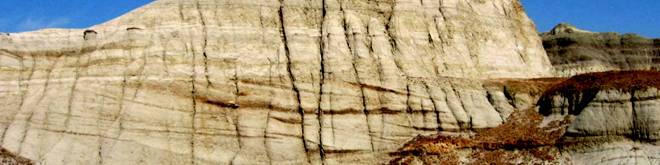


   Cross-bedded Cretaceous fluvial sandstone – Dinosaur Park, Alberta


GEOL-201 is focused on the features of a wide range of sedimentary depositional environments and on the characteristics of sediments and sedimentary rocks that form in those environments.  Wherever possible we will look at field examples of the actual depositional environments or of rocks deposited in those environments, or both.  The course will include a great deal of field work.  We will also spend time learning about and using methods that geologists use to study sediments and sedimentary rocks in the field and in the lab.


Timetable (all in 370/107 or the field):

Wednesday class

Friday class

Friday lab

11:30 to 1:00

11:30 to 1:00

1:00 to 4:00


The textbook is: Sedimentary Geology (2nd Ed.) by D. R. Prothero and F. Schwab. 


Major course topics


·         Fluvial processes and features of sediments & rocks formed in river environments

·         Glacial processes & features of sediments formed in glacial environments

·         Near-shore marine processes & features of sediments & rocks formed in near-shore environments

·         Sub-marine fan environments & features of rocks formed in sub-marine fans

·         Shallow marine carbonate environments and features of carbonate rocks

·         Grain-size analysis of sediments

·         Trace fossils

·         Lithostratigraphy & biostratigraphy


Project


In anticipation of the unveiling and display of the giant VIU Cretaceous Palm Fossil (Pheonicites imperialis) later this spring, we will be examining the stratigraphy and depositional environments of the Nanaimo Group rocks near to the Cranberry Arms site in Cedar where the palm and many broadleaf tree leaf fossils were discovered.  The project will include field work and the preparation of an interpretive poster on the environment in which these plants were growing.


Course schedule


Wednesday (class)

Friday (class and lab or field trip)


January

4

Introduction

6

Weathering and erosion

No lab


11

Fluvial processes

13

Fluvial processes


Nanaimo River field trip


18

Sedimentary structures

20

Glacial processes


Fluvial rock field trip


25

Glacial processes and gravity flows

27

Glaciation cont. & clastic rock classification


Beach estates field trip


February

1

Grain size classification

3

Interpreting grain size data

Lab work on unconsolidated samples


8

Shoreline processes

10

Sandstones (including thin sections)


Stephenson Pt. & Malaspina Cut


15

Trace fossils

17

Submarine fan environments


Nanaimo Gp. s-m fan deposition


No classes - spring break


Feb/March

29

Turbidites

2

Gabriola Island field trip


March

7

Carbonate depositional environments

9

Belize depositional environments

Work with Belize carbonate samples


14

Carbonate rock classification

16

 Horne Lake field trip


21

Litho- and bio-stratigraphy

23

Sedimentary rocks in thin section


Harewood section measurement


28

Palm fossil project

30

Palm fossil project


Cranberry Arms field trip  


April

4

Palm fossil project


Academic integrity


The following standards of academic integrity are copied from the Student Academic Code of Conduct.  The entire policy can be found on the VIU website at: https://isweb.viu.ca/policy_procedure/docshow.asp?doc_id=22685. All students should read the entire policy document.


STANDARDS OF ACADEMIC INTEGRITY

Students are expected to meet the standards of academic integrity as indicated in this policy.  Standards of academic integrity include, but are not limited to:

  • independently producing work submitted under one’s own name;
  • properly and appropriately referencing all work;
  • identifying all collaborators in work;
  • completing examinations without giving or receiving assistance, excepting those students requiring assistance due to a documented disability; and
  • respecting the integrity of examination materials and/or the examination process


Grading:


The plan for grading is as follows:

Field-trip participation: 25%

Lab work on field trip samples: 5%

Description of sedimentary rocks in thin section: 5%

Harewood section measurement and drawing: 10%

Palm fossil group project: 25%

Final exam: 30%


My objectives for your learning in GEOL-201:


1) Foundational knowledge: Acquire basic knowledge about sedimentary geology


2) Application:

a) learn how to think like a geologist

b) learn how to solve sedimentary geology problems that we encounter in the course

c) learn how to solve problems that are different from those that we encounter in this course.


3) Integration: Understand how sedimentary geology relates to other areas of earth science, such as plate tectonics, climate change, paleontology and groundwater


4) Internalization: Get excited about sedimentary geology and recognize its importance to you and society.  Learn something about yourself and your abilities; learn about other people.


5) Learn about learning: Become a more capable learner.  Learn how to acquire and construct knowledge.  Become a self-directed learner.  Become a teacher, and discover something about how other people learn.